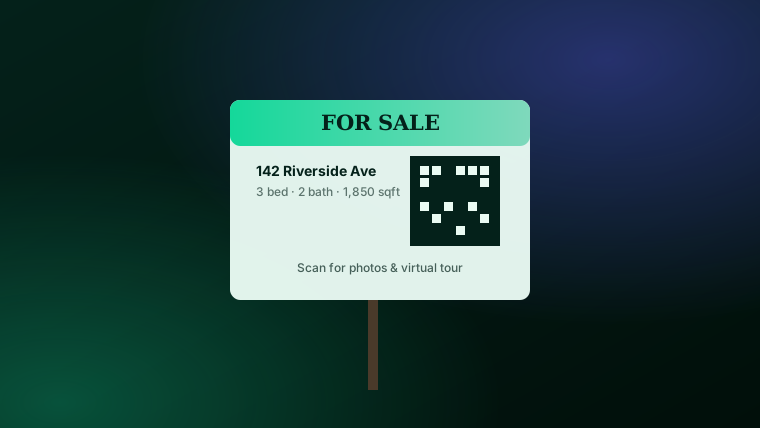
A "For Sale" sign has always had one job: get a curious passerby to take the next step. Before QR codes, that meant a phone number or a web address someone had to type in later, if they remembered at all. A QR code collapses that into one motion — see the sign, scan it, land on the listing.
What to link it to
- The full listing — photos, price, square footage, and details, so someone doesn't have to wait for an agent to call back.
- A virtual tour — especially useful for evenings or when the house isn't available to view in person right that moment.
- A contact form — for flyers left at an open house, where capturing interest matters more than showing more photos.
Sizing it for outdoor viewing
A code meant to be scanned from a few feet away — on a yard sign, read from the sidewalk or a car window — needs to be noticeably bigger than one on a business card or menu. A few inches square is a reasonable starting point; test the actual sign from a realistic distance before committing to a full print run. See printable QR codes for menus & flyers for the general resolution and sizing rules that apply here too.
Printing for the outdoors
Direct sunlight and weather add a few practical considerations: avoid a glossy laminate that creates glare over the code, keep good contrast between the code and its background, and make sure the printed material itself is durable enough to survive being outside for the length of the listing.
Put a trackable QR code on your next listing.
Your brand colors, a dynamic link you can update anytime, and real scan data on every sign.
See pricing →Why dynamic matters more here than almost anywhere else
A yard sign often outlives a single listing — agents reuse signs, or a property takes longer to sell than expected and the listing details change. A static QR code is locked to whatever page it pointed to when it was printed; if that page moves or the listing closes, the sign becomes dead weight. A dynamic code lets you redirect it to a new listing anytime, from a dashboard, without touching the physical sign at all.
Tracking which signs are actually working
Once you've got signs on multiple properties, a tracked QR code tells you which locations are generating real interest — scan counts by sign, not just a guess based on how many calls came in that week.
The bottom line
A real estate sign's whole purpose is to convert a passing glance into a lead. A properly sized, dynamic, tracked QR code is the cheapest way to make that conversion happen in one scan instead of a forgotten phone number.
Frequently asked questions
What should a real estate QR code link to?+
Usually the full listing — photos, a virtual tour, price, and details — or a contact form so an interested buyer can reach the agent directly without waiting for an open house.
How big should a QR code be on a yard sign?+
Bigger than you'd use on a menu or business card, since it's typically scanned from a few feet away, outdoors. A few inches square is a reasonable starting point — test it from the sidewalk or curb before printing the full run.
Can I update the listing a QR code points to after the sign is printed?+
Only if the code is dynamic — it encodes a short redirect link you control, so you can point it at a new listing later without reprinting the sign. A static code is locked to one destination forever.
Do QR codes work well outdoors?+
Yes, as long as the code is sized for the scanning distance and printed with enough contrast to read in daylight. Avoid glossy laminate that creates glare over the code in direct sun.
Can I track how many people scan my real estate signs?+
Yes, with a dynamic tracked QR code — you'll see scan counts, so you can tell which listing or which sign location is actually generating interest.